

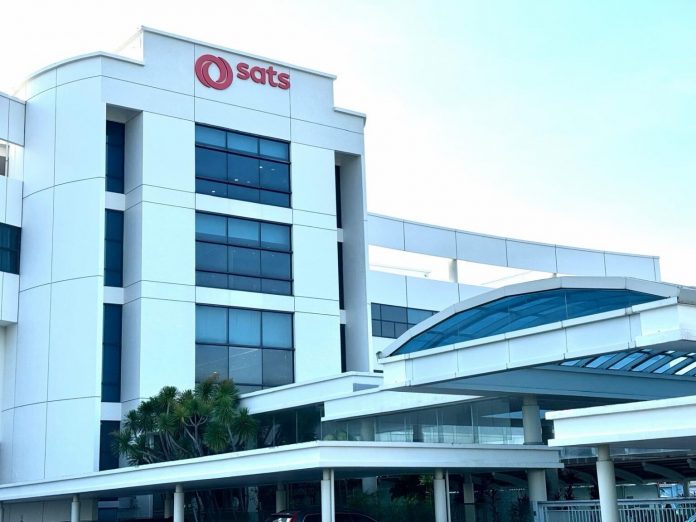

Airport services provider SATS says it is closely monitoring the escalating conflict in the Middle East, warning that widespread airspace closures across parts of the Gulf are beginning to disrupt global air cargo supply chains.
The Singapore-based ground handling and cargo services group said its thoughts were with communities affected by the conflict and praised airport staff across the Gulf states for maintaining operations under difficult conditions.
“As a leading provider of air cargo handling services, we are deeply concerned with the unprecedented airspace closures in some Gulf states that are affecting the global air cargo supply chain,” the company said in a statement.
Cargo shipments facing delays
SATS said flight disruptions in the region could temporarily delay some cargo shipments. However, the company expects logistics networks to adapt as airlines reroute services and supply chains adjust.
Air cargo typically shifts to alternative routes during periods of disruption, with carriers and logistics providers redirecting traffic through open air corridors and alternative hubs.
SATS said its global operations network positions the company to help manage such disruptions as trade flows evolve.
“We are in close contact with our airline customers and will continue to adjust our operations in line with how trade lanes develop,” the company said.
Middle East operations continue
The group operates cargo and ground handling facilities in Saudi Arabia and Oman. SATS said all employees in the region, including Singaporean staff deployed there, remain safe and that operations are continuing under established safety and security protocols.
According to the company, there have been no material disruptions to its Middle East operations since 28 February 2026.
Although the region represents only a small share of SATS’ global cargo volumes, the Middle East remains a key growth market for the company.
SATS reported that its stations in Saudi Arabia recorded a 12% increase in cargo volumes handled between 2024 and 2025, driven largely by rising demand for e-commerce and specialised cargo such as pharmaceuticals and temperature-controlled shipments.
Alternative gateways for Gulf cargo
The company said its facilities in Saudi Arabia and Oman could act as alternative gateways into Gulf Cooperation Council (GCC) markets where airspace closures have disrupted direct routes.
These locations could also support the movement of emergency supplies if required, the company said.
Historically, geopolitical crises and supply chain disruptions tend to increase reliance on air freight, as businesses prioritise speed and reliability over lower-cost transport options such as sea or road.
“Conflict-driven disruptions often make shipments more time-sensitive,” SATS said. “Air cargo’s faster reaction time makes it a preferred means for moving critical shipments in a rapidly evolving environment.”
Industry adapting to changing routes
SATS said it would continue working with airlines and logistics partners to ensure the safe handling, storage and onward movement of cargo as routes and schedules are adjusted.
The company added that it would use its global network to minimise disruption for customers while the situation in the Middle East continues to evolve.