

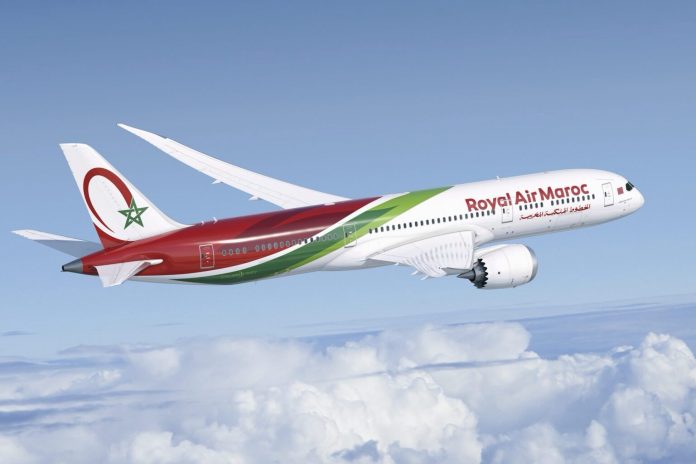

Royal Air Maroc Cargo, the cargo arm of Morocco’s national carrier, celebrates over 45 years of service in the U.S. market, which it entered in 1979 with the Casablanca–New York (JFK) route.
Today, Royal Air Maroc Cargo’s U.S. operations account for nearly 90 per cent of its transatlantic volumes, diplomatic shipments, and traditional Moroccan crafts.
The airline’s gateway distribution across the U.S. is led by JFK (65%), followed by Miami (10%) and Washington Dulles (25%).
From its Casablanca hub (CMN), Royal Air Maroc Cargo offers swift and competitive connections not only to Morocco but to over 30 African destinations, as well as Europe, Turkey, and Brazil.
Casablanca’s strategic location and optimised transfer process shorten lead times by up to 24 hours compared to European or Gulf hubs.
Nearly 10% of shipments to the U.S. originate from West Africa, highlighting the hub’s capacity to connect Africa with the United States.
Beyond steady volumes of perishables, pharmaceuticals, and industrial products, we regularly transport emblematic shipments such as handcrafted Moroccan “zellige” from Casablanca, destined to hotels or private U.S. residences, showcasing the airline’s capability in handling bespoke, high-value cargo with cultural sensitivity.
In the United States, Globe Air Cargo, part of the ECS Group, represents Royal Air Maroc Cargo, handling commercial promotion, sales, efficient handling, and providing real-time tracking and customer support.
The airline’s digital transformation includes active partnerships with cargo.one and CargoAi, enabling 24/7 online booking and shipment visibility.
Fleet operations combine Boeing 787 Dreamliners’ bellyhold capacity, a Boeing 767 freighter and numerous B737, efficiently serving an 82-destination global network.
Rita Chraibi, Vice-President Cargo at Royal Air Maroc, said: “Royal Air Maroc Cargo has proudly connected the United States with Morocco and Africa for over 45 years.
“Our growth reflects the trust of our customers and Casablanca’s pivotal role as a global hub. Looking ahead, we are studying expansion to Los Angeles (LAX) to enhance our North American footprint and focusing on strategic segments such as perishables and GDP-compliant pharmaceuticals.
“As we plan to quadruple our fleet by 2037, our U.S. operations will remain central in linking North America, Africa, and the world”.