



Despite the constant headlines surrounding artificial intelligence, sustainable aviation fuel, e-commerce growth and airport megaprojects, air cargo continues to operate largely out of the public spotlight. Quietly, efficiently and relentlessly, it moves extraordinary economic value every single day—yet its true contribution to global trade remains widely underappreciated.
The numbers tell a powerful story.
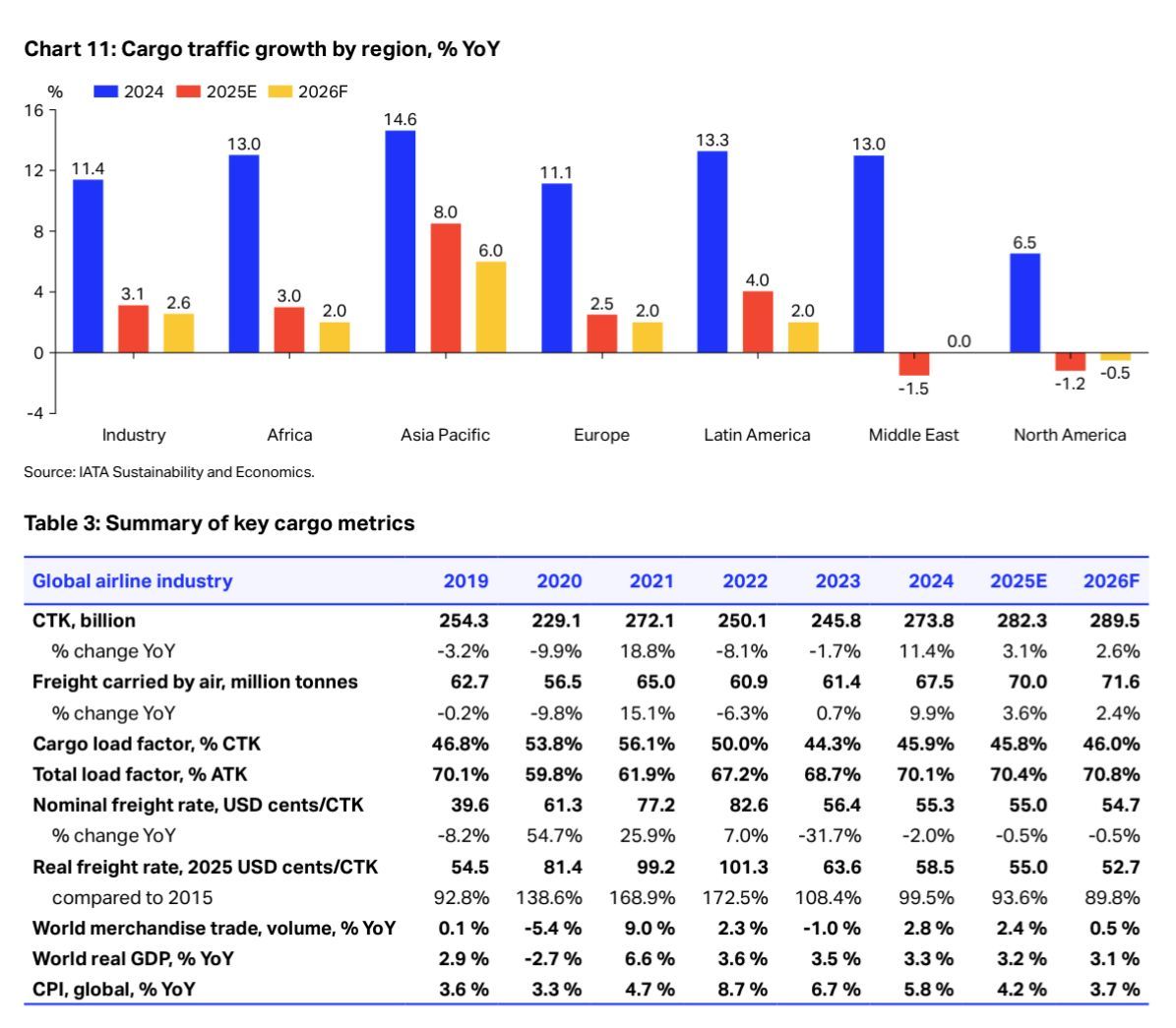
According to data from the International Air Transport Association (IATA), air cargo transports more than USD 8 trillion worth of goods annually, representing roughly one-third of global trade by value, while accounting for less than 1% of total trade by weight. In 2024 alone, global air cargo demand, measured in cargo tonne-kilometres (CTKs), grew 11.3% year-on-year, with international volumes rising even faster at 12.2%. Capacity also expanded, but at a slower pace—7.4% overall, reinforcing the sector’s growing strategic importance to modern global commerce .
These figures confirm one clear reality: air cargo is no longer a supporting actor in global trade—it is a central pillar of it.
Why Marketing Matters More Than Ever in Air Cargo
Given air cargo’s massive economic footprint, why does the industry still struggle for broader recognition and influence? The answer lies in visibility—or the lack of it.
- Visibility and Recognition
Aviation remains publicly synonymous with passengers. Cargo often receives limited attention in government planning, despite being a major economic driver. - Economic Justification for Infrastructure Investment
Data-driven storytelling strengthens the case for faster customs processes, upgraded cargo hubs, cold chain infrastructure and digital trade corridors. - Talent Attraction and Innovation
Engineers, data specialists and logistics professionals gravitate toward industries they can see growing. If air cargo remains “invisible,” innovation risks following the same path. - Competitive Differentiation
Air cargo competes directly with sea, rail and road. Its advantages—speed, security, reliability and ability to move high-value goods—must be clearly communicated. - Sustainability and Social Responsibility
From SAF adoption to humanitarian aid and vaccine distribution, air cargo already plays a crucial role in sustainability and global welfare—yet these success stories often go untold. - Policy Influence
Governments regulate based on what they understand. Without focused communication, the industry risks being shaped by outdated assumptions instead of real-world impact.
The Reality the World Already Relies On
Air cargo now moves billions of dollars’ worth of goods every single day, supporting industries from pharmaceuticals and semiconductors to automotive, fashion, and critical medical supplies.
Demand has not only recovered—it is surpassing pre-pandemic levels in many markets. Yet despite this momentum, infrastructure expansion, regulatory frameworks and capital investment often lag behind reality.
What the Industry Must Do Next
To secure its future and its rightful place in global economic planning, air cargo must:
Tell its story louder and more often using verified data and real-world impact.
Unify industry messaging across airlines, airports, handlers and forwarders.
Fully embrace modern media and digital marketing tools.
Engage policymakers and journalists proactively, not reactively.
This is no longer simply about promotion—it is about strategic economic positioning.
A Final Thought
Air cargo is not a “nice-to-have.” It is a mission-critical engine of global trade, economic resilience and humanitarian response. Its influence is backed by undeniable data. What has been missing is consistent visibility.
Because when air cargo thrives, global economies thrive with it.
© 2025 Bhavana Khera. Published by Avia Updates Cargo. All rights reserved.
Article Credits
Written By
Bhavana Khera – Brand Consultant
Published By
Avia Updates Cargo
Sources
Industry insights and data in this article are derived from recent International Air Transport Association (IATA) publications, including:
- Air cargo transporting over USD 8 trillion in goods annually, representing around 33% of global trade by value.
- Air cargo accounting for more than 35% of global trade value, while representing less than 1% by weight.
IATA’s 2024 updates showing:
- Global air cargo demand (CTK) increased 11.3% year-on-year (international CTK up 12.2%).
- Available cargo capacity (ACTK) rose 7.4% globally and 9.6% for international operations.