


Alaska Airlines, Inc. today announced it is entering into long-term lease agreements to add four 737-800 Boeing Converted Freighter (BCF) aircraft to its dedicated cargo fleet, increasing the carrier’s 737 freighter fleet from five to nine aircraft.
The four additional freighters will effectively double the capacity of our freighter fleet, while injecting more reliability into cargo service for communities we serve and providing more flexibility in aircraft allocation across the airline’s cargo network.
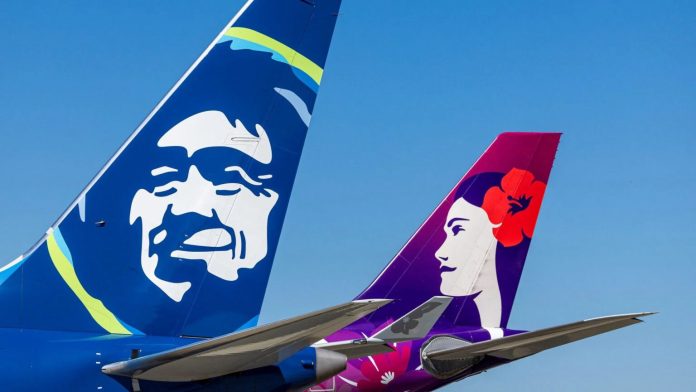
The freighters are expected to enter service in the first half of 2027 and will be dedicated to the states of Alaska and Hawai‘i, with the plan to paint Hawai‘i-based cargo aircraft in Hawaiian Air Cargo livery.
These additional freighters help strengthen the network that connects communities across the states of Alaska and Hawai‘i to the contiguous U.S., and links them into Alaska’s broader global cargo network.
Added capacity in Hawai‘i is also expected to benefit e-commerce and logistics industries by giving businesses increased reliability in moving goods.
Ian Morgan, Vice President of Cargo, Alaska Airlines, said: “Alaska Air Cargo has two very important goals: supporting our communities and customers and connecting them to the world.
“Expanding our cargo fleet with dedicated aircraft helps us accomplish both goals, opening up new international shipping opportunities for seafood and other commodities, while making sure we can reliably ship time-sensitive goods that our communities need, such as medicine, household supplies and groceries.”
Jayson Watts, Chair of the Hawaiʻi Agribusiness Development Corporation, Member of the Alaska Airlines and Hawaiian Airlines Hawaiʻi Community Advisory Board said: “Transportation has always been one of the biggest challenges for agriculture in Hawaiʻi.
“Having more dedicated cargo capacity gives our farmers and ranchers another reliable, consistent way to get fresh products to market.
“That’s a win for local agriculture, a win for our communities, and a critical step toward building a stronger, more resilient food system.”