

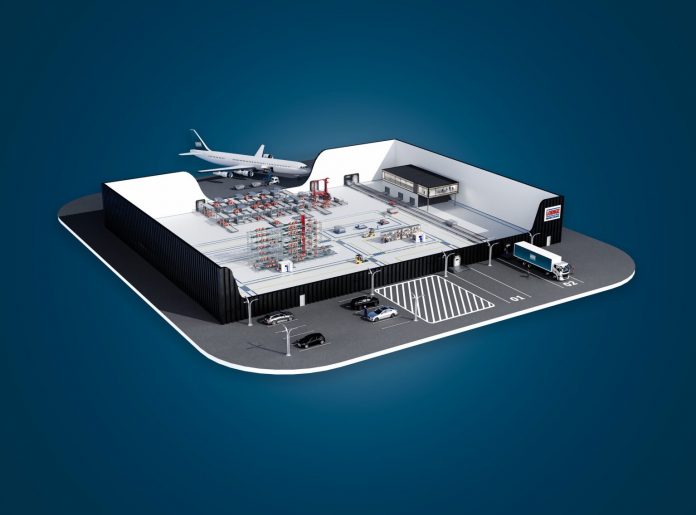

Air cargo terminals are facing increasing volume pressure, labour constraints and growing process complexity — just as airlines concentrate flows through fewer, high-intensity hubs that must deliver predictable performance under volatile conditions.
As a result, terminals are no longer merely local handling facilities. They are evolving into digitally connected performance nodes within airline and forwarder networks.
Responding to this structural shift, Lödige Industries has introduced Cargo Direct, a new software module designed to optimise workflows and capacity utilisation by intelligently linking air waybill (AWB) data with all terminal resources in real time.
By reducing unnecessary movements and synchronising handling resources with shipment priorities, Cargo Direct helps terminals increase throughput.
It stabilises operations during peak periods and enables more efficient use of existing infrastructure. Best-practice implementations show significant efficiency gains: streamlined process flow leads to shorter handling times and improved asset utilisation — unlocking throughput without expanding existing infrastructure.
While equipment automation increases mechanical performance, intelligent orchestration delivers consistent, repeatable operational throughput.
Cargo Direct consolidates shipment data, special handling codes, terminal layout, equipment availability and personnel resources into a single, continuously updated activity plan. Instead of merely recording user actions, the system actively determines and instructs the next optimal process step for each cargo unit.
Historically, large-scale automated terminals often struggled to match the operational transparency and responsiveness of smaller facilities.
By introducing structured, system-guided process automation, Cargo Direct enables large hubs to deliver visibility and control traditionally associated with smaller terminals — but at significantly higher scale.
Each cargo unit — whether ULD, in-house pallet or individual package — is identified via hand-held scanners connected via WLAN or 5G.
Based on scanned data, Cargo Direct automatically directs cargo to its next optimal destination, such as storage location, inspection station, X-ray screening or build-up workstation.
User interaction is reduced to a structured “scan-and-confirm” workflow, while exceptions such as damaged cargo or partial shipments are managed within the system logic.
Put-away and retrieval strategies are dynamically optimised to minimise travel distances and reduce waiting times at workstations.
Landside processes benefit from early door and gate assignment based on shipment content, layout constraints and operational priorities. Additional data sources, such as volume and weight information captured via smart gates with 3D scanning, can be integrated to improve ULD build-up density and increase overall terminal capacity.
This process-automation approach increases throughput per square metre, per automated machine and per man-day of labour — transforming scale from a complexity driver into a performance advantage.
Despite widespread equipment automation across the industry, many terminals still rely heavily on manual decision-making and individual experience.
Cargo Direct closes the gap between mechanical automation and true process automation, reducing operational variability and strengthening predictability at hub level.
Philippe De Backer, CEO of Lödige Industries, says: “Digitalisation in air cargo must go beyond data visibility.
“The real opportunity lies in intelligent, real-time operational orchestration — where shipment data, equipment and resources are managed as one coordinated system.
“By closing the gap between equipment automation and true process automation, Cargo Direct helps terminals deliver consistent, repeatable operational throughput while supporting hub connectivity and schedule resilience.”