


Air charter technology specialist Aerios has launched a new Artificial Intelligence module designed to improve operational efficiency by automating responses to charter requests.
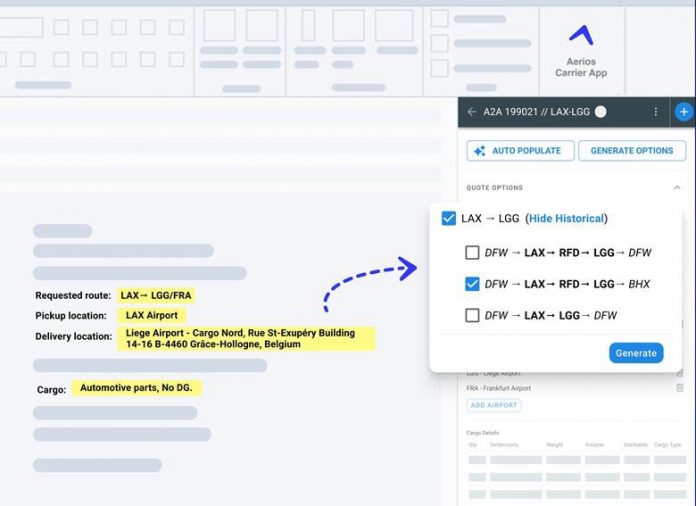
The new Automation and AI module captures operational data from charter enquiries received in multiple formats and converts it into structured data, enabling faster and more consistent workflows across carrier teams.
Aerios noted that more than 90% of charter requests are typically received by email, with key cargo and packing list information often embedded within attachments. Processing these enquiries usually involves manual data entry, assessing multiple routing options and generating several quotes per request — a time-consuming process that can lead to delays and increased risk of errors.
According to the company, the system can automatically generate routing options aligned with a carrier’s existing network, including aircraft positioning and technical stop requirements. It is also capable of managing complex, multi-airport requests with several origins or destinations, producing quotations within seconds. Cargo information is digitised from packing lists to support pricing, loadability checks and downstream operational planning.
Aerios said the module has the potential to reduce quotation turnaround times by up to 80%, building on the 66% reduction already achieved by carrier customers using earlier versions of the platform.
The AI functionality also analyses historical quoting data, using machine learning to recommend routing solutions based on comparable past requests. This includes suggestions for aircraft positioning and technical stops, helping less experienced team members produce accurate quotes more quickly while improving consistency across decentralised sales teams.
Simon Watson, founder and chief executive of Aerios, said the new module addresses a long-standing challenge within the air charter market. “By digitising request data within the Aerios environment, we are solving a daily operational pain point for carriers and laying the foundation for future platform capabilities,” he said.